The following contribution is from another author.
A practical camp kitchen keeps meal prep organized, reduces wasted supplies, and makes cleanup easier at the end of the day. The setup can be simple, but it needs clear zones for cooking, food preparation and washing. Before packing, sketch the layout you expect to use and check the rules at your destination. Some campgrounds provide picnic tables and water nearby, while remote sites may require you to bring every surface, light and water container yourself.
Plan Around Your Cooking Style
Start with the meals you’ll actually prepare. A weekend menu of oatmeal, sandwiches and one-pot dinners needs far less equipment than pancakes, grilled vegetables and a large family meal. A written menu helps you calculate ingredients and avoid packing utensils that never leave the storage bin.
Use a basic camp kitchen setup as a reference, then adapt it to your group. Keep frequently used items such as cooking oil, seasonings and utensils in one accessible container. Pack ingredients by meal, using labeled bags or containers, so you can pull out dinner without unloading every food bin. Store raw ingredients separately from ready-to-eat foods and bring a reliable cooler thermometer for temperature checks. Planning the wider campsite layout around a comfortable and well-organized outdoor basecamp can also make cooking, dining, and cleanup easier.
Reliable Prep Surfaces for Big Meals
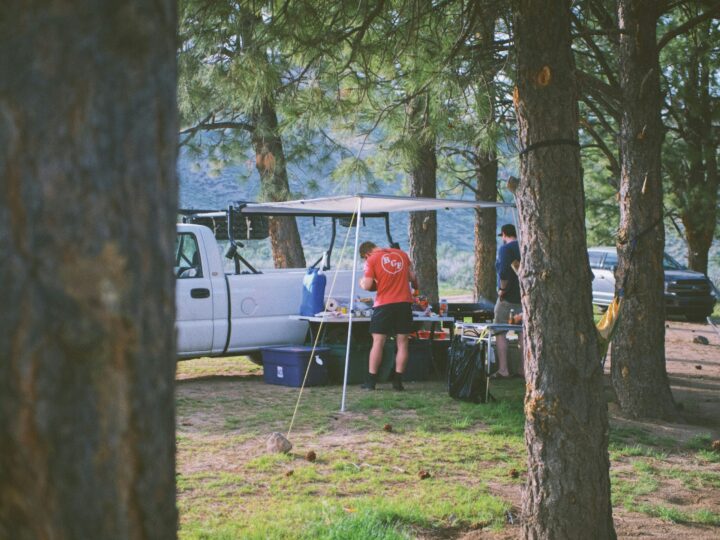
Choose a stable work surface that gives you enough room for a cutting board, bowls, and serving dishes. A folding table can provide a dedicated prep station when the campsite table is too small or already occupied. Set it on firm, level ground, check that its legs are locked securely, and confirm that its weight capacity is suitable before placing food or equipment on top.
Divide the surface into zones. One end can hold clean ingredients, the center can serve as the active prep area, and the other end can hold finished dishes. Use a washable table covering if the surface has gaps or a rough texture. Keep hot cookware on heat-resistant pads, and place food storage bins beneath the table only if they can be closed securely. This layout keeps traffic away from active meal preparation.
Power and Efficient Lighting
Plan your lighting around tasks instead of trying to illuminate the entire campsite. A rechargeable lantern above the prep area provides broad light, while a headlamp lets you check food or wash dishes without holding a flashlight. Warm, low-output lighting works well for general use and consumes less battery power.
Many camping kitchen ideas include collapsible containers and compact accessories that reduce clutter around charging equipment. Keep battery packs and cables in a dry, zippered pouch away from the washing station. Charge lights before leaving home and bring one backup light with its own power source. If you use a portable power station, confirm its output matches each appliance and place it where air can circulate freely.
Leave No Trace Cleanup Systems
Set up cleanup supplies before cooking begins. Use one basin for washing and another for rinsing, then keep a separate container nearby for food scraps. Scrape plates thoroughly so wash water contains as little food residue as possible. Strain the used water and dispose of it according to campground guidance or local land-management rules.
Biodegradable soap still needs careful handling because it can affect soil and waterways. Wash at least 200 feet from lakes and streams when local guidance calls for that distance, and never scatter scraps around camp. Pack trash in sturdy, sealable bags and wipe surfaces before storing them.
Once everything is dry, return each item to its assigned bin. That final reset means the next meal starts with a clear work surface, clean utensils, and no searching through mixed supplies.






The perspective on how to design an efficient camp kitchen anywhere made me pause and think. I tinker with AI character-animation clips on Ozil Goal AI, and it’s nice when a post stays grounded rather than chasing trends.
Bookmarking this one for the how to turn your outdoor space into a cozy living area bit alone. Running my own AI reveal experiments at [ANCHOR}, I notice how rarely a piece stays this focused without padding it out for length.
Tying ingredients in labeled bags to avoid unloading every food bin is a genuinely clever hack for keeping a weekend trip manageable. I’ve been thinking about how to apply that kind of spatial organization to my creative workflows recently. It sparks some interesting ideas for streamlining the visual prompts I use when generating videos on I Wanna Love You AI, especially with how much goes into a simple scene.
The zone-based layout advice transfers well to any workspace, honestly. I run a small site about AI-generated parody media and even there the same principle applies: group similar things, keep the workflow linear, and label everything clearly. The two-burner recommendation is spot on — one pan for staging, one for finishing.