The following contribution is from another author.
The right gear makes any outdoor adventure possible, but once you’re back home, it can quickly turn into a mountain of clutter in your closets, garage, or spare room. A disorganized pile of equipment doesn’t just make your living space feel cramped; it also makes it a pain to find what you need when adventure calls. Getting your adventure gear organized is about more than just tidiness; it’s about protecting your investment and making it way easier to get out the door for your next trip.
Assess Your Current Gear Inventory
Before you can even think about a storage system, you need to know exactly what you’re working with. So, pull everything out from its hiding spots and spread it all out on the floor. This is your chance to take a full inventory. Group similar items together: all your camping gear in one pile, climbing equipment in another, and water sports items in a third.
As you sort, take a good look at each piece for damage, wear, and tear. Does that tent have a new rip? Is your sleeping bag still fluffy? This is the perfect time to make a list of repairs or replacements needed. It’s also a good moment to be honest about what you actually use. If you have gear you haven’t touched in years, consider selling it or donating it to free up some space. The first step is always to tidy up your gear storage by decluttering what you no longer need.
Smart Storage Solutions for Small Spaces
Living in an apartment or a home with limited storage doesn’t mean your adventure gear has to take over your living room. The key is to think vertically and use those overlooked spaces.
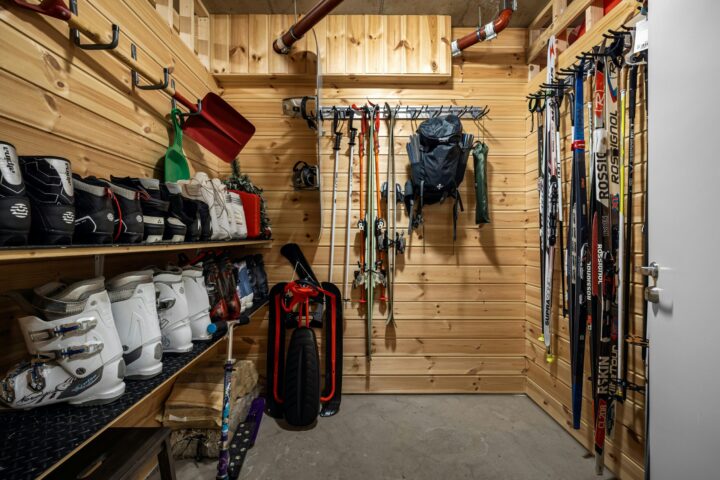
- Wall Space: Install pegboards or slatwall panels in a garage, closet, or hallway. These are perfect for hanging helmets, backpacks, and ropes. Floating shelves can hold bins of smaller items.
- Ceiling Space: Use ceiling-mounted racks or hoist systems in your garage to store bulky but lightweight items like kayaks, paddleboards, or cargo boxes.
- Hidden Spaces: Under-bed storage containers are great for soft goods like sleeping bags, outdoor apparel, and tent footprints.
For those larger items that simply won’t fit, a dedicated self-storage unit can be a lifesaver, freeing up valuable closet and floor space. You can find many creative smart camping storage ideas online that use wall space and other clever hacks effectively.
Protecting Your Investment from Elements
Your outdoor gear is built to withstand the elements, but only when you’re using it. During storage, it’s vulnerable to moisture, pests, and extreme temperatures, which can degrade materials and shorten their lifespan. Proper storage is important for protection.
Always clean and completely dry your gear before putting it away. A damp tent packed away will quickly grow mildew, and dirt left on equipment can attract pests. Store sleeping bags and insulated jackets loosely in large, breathable bags rather than their small compression sacks. For most other items, clear, airtight plastic bins are your best friend. They keep dust and moisture out while letting you see what’s inside. Store these bins in a cool, dry place like a closet or insulated garage, away from direct sunlight and extreme temperature swings.
When You Need More Than a Closet
There often comes a point when your gear collection just outgrows the space you have at home. If you find yourself constantly tripping over hiking boots or struggling to access your bike behind a stack of climbing pads, it might be time to consider an off-site solution. This is especially true for enthusiasts who participate in multiple sports and own bulky equipment like skis, surfboards, or a family-sized tent.
Using an external storage space allows you to reclaim your living areas without giving up the hobbies you love. It provides a secure, dedicated spot for items you don’t need daily access to. This strategy is particularly useful for gear that is highly seasonal. Instead of letting your skis take up a corner of the bedroom all summer, you can store them safely out of the way until the first snow falls.
Seasonal Rotation Made Easy
An organized system makes switching your gear between seasons a simple task instead of a weekend-long project. A great strategy is to use a two-bin or two-zone system: one for “in-season” gear and one for “off-season.” At the beginning of each major season change, like spring and fall, schedule a time to make the swap.
Move your winter gear, like skis, ice axes, and heavy jackets, into the off-season storage area. Then, bring your summer gear, like climbing ropes, backpacking equipment, and snorkeling masks, into the easily accessible “in-season” spot. While you’re at it, quickly inspect the gear you’re putting away for any needed repairs, and consider modern gear storage solutions. This process ensures the equipment you need is always ready to go, and it prevents the frustration of digging through winter parkas to find your swimsuit.
With a little organization, you can ensure your gear is protected, accessible, and ready for your next excursion. A smart storage system means less time spent searching and more time spent exploring.